Mercy Ships: The Numbers Behind Its Charity Rating and Recent Controversies
It’s easy to get caught up in the emotional pull of a story about a hospital ship. Grand visions, selfless volunteers, lives changed—all compelling narratives. But as someone who tends to look past the marketing gloss and straight at the underlying data, I see a different, perhaps more fundamental, story unfolding with Mercy Ships: one about ambitious scaling, intricate financial engineering, and the sheer logistical heft required to deliver on a truly global mission.
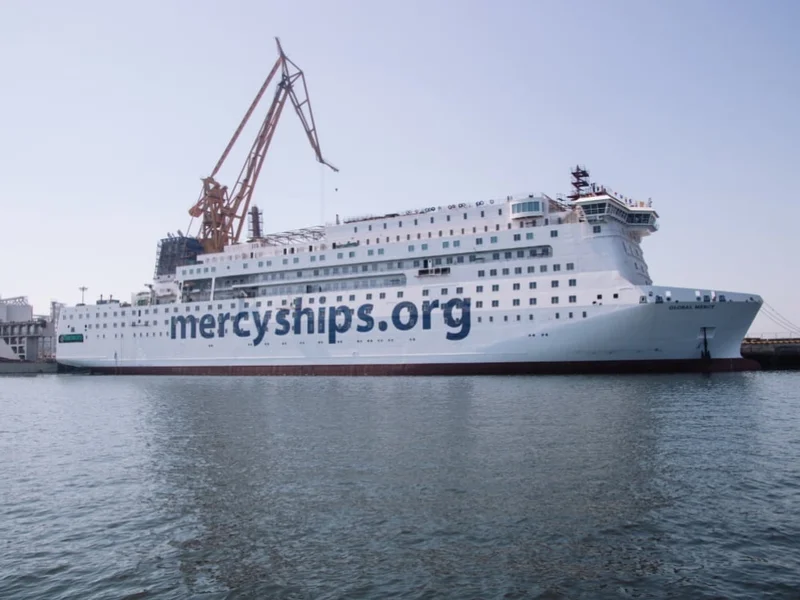
The latest news out of Guangzhou, China, confirms what the numbers have been hinting at for a while: Mercy Ships isn't just maintaining operations; it's aggressively expanding. The steel cutting ceremony for the AFRICA MERCY II marks the official start of construction for what will be one of the world’s largest civilian hospital ships. This isn't a minor upgrade; it's a significant expansion of operational capacity. Steel cut for Mercy Ships second new purpose-built hospital ship - DredgeWire This isn't a minor upgrade; it's a significant expansion of operational capacity.
The Calculus of Care: Doubling Down on Floating Hospitals
Let's be clear: building a vessel of this magnitude isn't a casual undertaking. We’re talking about a ship measuring 174 meters in length, 28.6 meters in breadth, with 12 decks capable of accommodating 644 volunteers and medical professionals. To put that in perspective, its hospital facilities alone will feature six operating rooms, 98 acute care beds, 86 low care beds, and seven ICU/isolation beds. That’s a small, modern hospital, afloat and mobile.
The AFRICA MERCY II is designed to be a sister ship to the GLOBAL MERCY, which Mercy Ships took delivery of in 2021. This means a standardized design, which, from an operational efficiency standpoint, makes a lot of sense. You streamline training, maintenance, and supply chains when your fleet shares a common blueprint. It’s a smart play, especially considering their current AFRICA MERCY is a repurposed Danish railway ferry from 1980—a vessel that has served admirably since 2007, but one can only push an older platform so far before diminishing returns kick in. The strategic decision to base the new build on a proven design, derived from a never-realized Stena RoPax class, indicates a calculated move to maximize impact per dollar invested.
The ceremony itself, with a tree planting at Tongzhou Forest symbolizing growth, unity, and new beginnings, is a nice touch. But the real "growth" is in the hard numbers: the expanded bed count, the additional operating theaters, the sheer volume of potential patient care. This isn't just about adding another ship; it's about a substantial increase in their ability to deliver free surgical care and medical training across Africa. My analysis suggests this move positions Mercy Ships for a significant leap in annual patient impact, assuming, of course, they can staff and supply these vessels consistently. What are the projected annual patient numbers once AFRICA MERCY II is fully operational, compared to their current capacity? And how will they manage the inevitable surge in demand for volunteers and medical professionals (a key concern for any organization relying on such a model)?
The Financial Tide: Cargo Day's Critical Role
Building and operating these behemoths requires a colossal financial engine. And this is where the other critical piece of data comes in: Mercy Ships’ 2025 Cargo Day campaign. This isn't just some casual fundraiser; it’s a highly effective, industry-wide mobilization of capital. Pledges have already surpassed $1.6 million, with an ambitious target of $2.5 million by year-end. Over its decade-long run, Cargo Day has channeled nearly $15 million into the organization. Mercy Ships’ Cargo Day Sets Sights on Record Fundraising to Power Life-Changing Medical Missions
The mechanism is elegant in its simplicity: shipping companies, brokers, and related businesses donate a portion of their commissions or make direct contributions. It’s a direct conduit from the global maritime economy to the global health mission. And this is the part of the report that I find genuinely puzzling: how exactly are these "pledges" structured? Are they legally binding commitments, or more aspirational targets? The distinction matters when you’re talking about funding multi-million dollar vessels and complex medical operations.
This initiative, sparked by the late Tim Webb, has grown from a tanker-sector focus to encompass dry bulk carriers, shipowners, shipbuilders, terminals, agents, suppliers, and service providers. It’s a testament to collective action, certainly. But it also highlights the absolute necessity of a robust, diversified funding base for an organization like Mercy Ships. The $2.5 million target for 2025 represents a significant jump from previous years—to be more exact, it's a 66% increase from the current $1.6 million pledged. This isn’t just incremental growth; it suggests a heightened need, or perhaps a renewed optimism, in their fundraising strategy.
The funds don't just pay for steel and fuel; they cover the thousands of free surgeries (cataract removal, cleft lip repairs, orthopedic procedures) and, crucially, the medical training programs that empower local healthcare workers. This dual approach—direct intervention and capacity building—is a sound strategy for long-term impact. But it's also a highly capital-intensive one. How does Mercy Ships quantify the long-term ROI of their training programs? Is there a clear metric for how many local healthcare professionals remain in their communities and how effectively they apply their new skills? Without that data, the "lasting change" remains somewhat theoretical.
The construction of AFRICA MERCY II and the success of Cargo Day are two sides of the same coin, really. One is the physical manifestation of ambition, the other is the financial bedrock that makes that ambition possible. It’s a well-oiled machine, but like any machine, it requires constant fuel and meticulous maintenance. The challenge, as always, lies not just in building the capacity, but in sustaining it, year after year, against the backdrop of global economic shifts and the ever-present need for charitable giving.
The Real Cost of Compassion

-

The Business of Plasma Donation: How the Process Works and Who the Key Players Are
Theterm"plasma"suffersfromas...
-

Warren Buffett's OXY Stock Play: The Latest Drama, Buffett's Angle, and Why You Shouldn't Believe the Hype
Solet'sgetthisstraight.Occide...
-

The Great Up-Leveling: What's Happening Now and How We Step Up
Haveyoueverfeltlikeyou'redri...
-

Applied Digital (APLD) Stock: Analyzing the Surge, Analyst Targets, and Its Real Valuation
AppliedDigital'sParabolicRise:...
-

NJ's ANCHOR Program: A Blueprint for Tax Relief, Your 2024 Payment, and What Comes Next
NewJersey'sANCHORProgramIsn't...
- Search
- Recently Published
-
- Quantum AI Leap: Personalized Business Solutions – Unlocking the Next Era of Enterprise & Innovation
- Mercy Ships: The Numbers Behind Its Charity Rating and Recent Controversies
- Popcat: The Meme, the Crypto, and Its Unfolding Story
- Larry Page Just Became The World's #2 Richest: His real net worth, who he even *is*, and what Sergey Brin's up to
- Zcash: Grayscale's ETF Filing – The 'GBTC 2.0' Precedent and Market Speculation – What Reddit is Saying
- AVGO Stock: The Price, The NVDA Delusion, and The Earnings Reality Check
- Xbox Cloud Gaming: Fortnite, Game Pass, and What It All Means
- The AI-Driven Market Evolution: Today's Essential Insights and AI's Visionary Future
- Nasdaq: Today's Performance, Key Movers, and Nvidia's Role
- McKinsey: AI Reports and What They Really Mean
- Tag list
-
- carbon trading (2)
- Blockchain (11)
- Decentralization (5)
- Smart Contracts (4)
- Cryptocurrency (26)
- DeFi (5)
- Bitcoin (29)
- Trump (5)
- Ethereum (8)
- Pudgy Penguins (5)
- NFT (5)
- Solana (5)
- cryptocurrency (6)
- XRP (3)
- Airdrop (3)
- MicroStrategy (3)
- Stablecoin (3)
- Digital Assets (3)
- PENGU (3)
- Plasma (5)
- Zcash (6)
- Aster (4)
- investment advisor (4)
- crypto exchange binance (3)
- SX Network (3)